In the ever-evolving landscape of video games, where cutting-edge graphics and immersive gameplay often steal the spotlight, a quieter, more meticulous profession operates in the background. These are the game historians, the dedicated archivists and storytellers who ensure that the rich, complex, and often fragile history of this digital medium is not lost to time. Their work is a fascinating blend of digital archaeology, rigorous verification, and narrative craft, all aimed at preserving and contextualizing the stories behind the games we love.
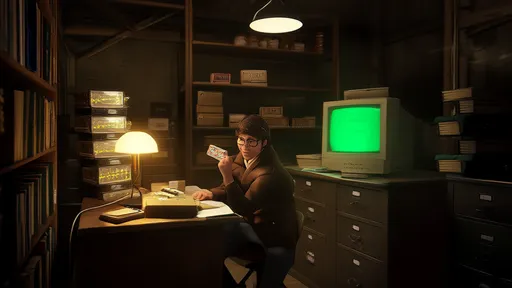
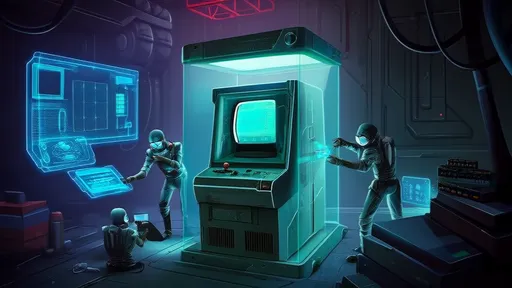
The initial phase of a game historian's work is perhaps the most akin to traditional archaeology, though their digs are more likely to occur in forgotten server racks, dusty corporate archives, and obscure online forums than in ancient ruins. This process of excavation involves unearthing primary source materials that have often been neglected or deemed commercially irrelevant. For every blockbuster title with its development well-documented in press releases and "making-of" documentaries, there are hundreds of forgotten games, cancelled projects, and obscure prototypes whose stories are on the verge of disappearing.
Historians spend countless hours tracking down and recovering these artifacts. This can mean physically acquiring old development kits, like Sega Neptune prototypes or beta versions of games on decaying floppy disks. It increasingly means performing digital rescue operations, seeking out and preserving source code, design documents, concept art, and internal emails from studios that have long since closed their doors. They reach out to retired developers, conducting oral history interviews to capture firsthand accounts that exist nowhere else. Each recovered email, sketch, or interview snippet is a piece of a puzzle, a fragment of a story waiting to be told.
However, unearthing these materials is only the beginning. In an industry rife with rumors, marketing hype, and fan-made myths, the mere existence of a document or an anecdote is not enough. This is where the critical second phase, verification
Verification is a meticulous and often painstaking process. It involves authenticating physical artifacts: Is this really a genuine cartridge from a Nintendo PlayStation prototype, or a clever forgery? It demands cross-referencing multiple accounts: Does the story a programmer tells about a contentious development cycle align with the emails from the project lead and the timelines in old magazine previews? Historians act as detectives, following chains of evidence, identifying inconsistencies, and building a corroborated timeline of events. This process is crucial because the history of games is not just about what was released; it's about the decisions, mistakes, and technological constraints that shaped the final product. Verifying why a beloved feature was cut, why a studio suddenly changed direction, or how a technical breakthrough was achieved requires piecing together evidence from multiple, often conflicting, sources to arrive at a truthful and nuanced understanding. With a body of excavated and verified evidence in hand, the game historian's final and most public-facing role is to narrate the story. This is where raw data and verified facts are transformed into a compelling narrative that illuminates the human experience behind the digital creation. It is not enough to simply list events and dates; the historian must contextualize them, explaining their significance to both the industry and the culture at large. This storytelling can take many forms. It might be a long-form written article detailing the turbulent development of a classic game, a documentary film weaving together interviews with archived footage, a meticulously researched book charting the rise and fall of a legendary studio, or even a curated museum exhibition. The goal is to answer the deeper questions: What was the creative vision? What were the human struggles and triumphs? How did this game reflect or influence the era in which it was made? The best game historians write with the authority of their research but the accessibility of a great storyteller. They breathe life into long-retired developers and long-cancelled projects, allowing us to understand games not merely as consumer products, but as cultural artifacts born from specific times, places, and people. They connect the dots between technological innovation, artistic ambition, business pressure, and pure happenstance, revealing the intricate tapestry of game development. In conclusion, the work of game historians is foundational to the cultural maturity of the video game medium. They are the guardians of its memory, ensuring that the lessons of the past are learned and that the creativity and labor of countless developers are acknowledged and understood. By diligently excavating lost materials, rigorously verifying every fact, and skillfully narrating the complex stories they uncover, these historians do more than just record events; they enrich our appreciation for the games themselves and secure a legacy for an art form that is too often focused only on the next release. Theirs is a vital mission of preservation and illumination, one game story at a time.

By /Aug 26, 2025
By /Aug 26, 2025

By /Aug 26, 2025
By /Aug 26, 2025

By /Aug 26, 2025
By /Aug 26, 2025

By /Aug 26, 2025
By /Aug 26, 2025

By /Aug 26, 2025
By /Aug 26, 2025

By /Aug 26, 2025
By /Aug 26, 2025
By /Aug 26, 2025
By /Aug 26, 2025

By /Aug 26, 2025

By /Aug 26, 2025

By /Aug 26, 2025

By /Aug 26, 2025
By /Aug 26, 2025
By /Aug 26, 2025