In an industry increasingly dominated by battle passes, daily quests, and the relentless pursuit of player engagement metrics, a quiet but potent counter-movement is flourishing. This movement champions a different kind of digital experience, one defined not by the frenetic pace of a competitive shooter or the compulsive loops of a free-to-play title, but by a deliberate, almost meditative slowness. This design philosophy, often termed "slow gaming," is a conscious rejection of efficiency-first paradigms, advocating instead for experiences rooted in contemplation, deep exploration, and intrinsic motivation. It is a return to the idea of the video game as a space to be inhabited and savored, rather than a system to be optimised and conquered.
The modern gaming landscape is, in many ways, a monument to efficiency. From the meticulously calculated reward schedules that keep players hooked to the minimap markers that eliminate any need for organic discovery, much of contemporary design is about streamlining the path to gratification. The ubiquitous quest log tells you not just what to do, but where to go and often how to do it, reducing vast, imaginative worlds to a series of checklist objectives. This is design as a service to convenience, but it often comes at a cost: the erosion of mystery, the diminishment of personal accomplishment, and the transformation of play into a form of digital labour.
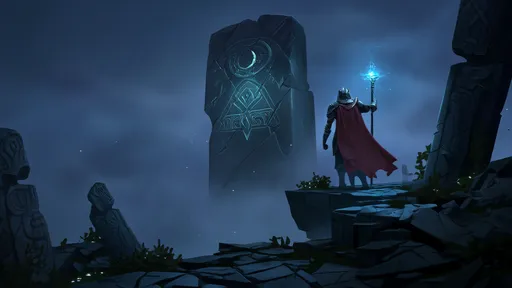
In stark contrast, the ethos of slow gaming asks players to shed these productivity-minded habits. It invites them to linger. A game built on this principle might feature a vast, open landscape with no waypoints, compelling the player to navigate by the sun, stars, or distant, curious landmarks. It might involve mechanics that are intentionally unwieldy or time-consuming, not as a flaw, but as a deliberate design choice to foster a more thoughtful and physical connection to the virtual world. The goal is not to race to the next cutscene or level cap, but to become fully present within the environment the developers have crafted, to appreciate the subtle play of light through digital leaves or the haunting silence of a forgotten ruin.
This is not a new concept, but rather a rediscovery of a foundational aspect of play. The adventure games of the 80s and 90s, devoid of tutorials and hand-holding, required players to study their surroundings, combine items in creative ways, and sit with puzzles for hours or even days. The emergence of the "walking simulator" genre in the 2010s, with titles like Dear Esther and Gone Home, was a watershed moment. These games stripped away conventional mechanics like combat and fail states, focusing entirely on environmental storytelling and atmospheric exploration. They proved that a powerful, emotionally resonant experience could be built on the simple acts of moving through a space and piecing together a narrative.
Today, this philosophy has matured and expanded into a diverse spectrum of experiences. Games like Outer Wilds are perhaps its purest expression. Here, progress is gated not by acquiring better gear or levelling up, but purely by player knowledge gained through exploration and experimentation. The entire solar system is available from the outset; the only barrier is not knowing what to do or where to go. The game demands curiosity and patience, rewarding those who are willing to read ancient texts, formulate theories, and test them without any promise of a immediate payoff. It is the antithesis of an efficiency-driven design.
Similarly, the monumental success of Red Dead Redemption 2 can be partly attributed to its commitment to a slower, more immersive pace. Rockstar Games filled its world with granular, often "inefficient" details: the deliberate animation of skinning an animal, the need to manually clean weapons, the camp chores that offer no significant reward. These elements were criticised by some as tedious, but for others, they were essential in building a tangible, believable world that resisted being rushed. They forced the player to live the life of an outlaw, not just play as one.
Even in more traditional genres, the influence of slow design is evident. Survival games like The Long Dark or Valheim derive their tension not from twitch reflexes but from meticulous resource management and long-term planning. The satisfaction comes from building a shelter against a raging blizzard or successfully embarking on a long voyage after careful preparation. The journey itself, with all its potential for disaster and discovery, is the point. Furthermore, the booming genre of "cozy games," exemplified by titles like Animal Crossing: New Horizons and Stardew Valley, operates on a fundamentally slow timescale. These games sync with real-world clocks and seasons, enforcing a pace of play that is measured in days and weeks, not minutes. They are about cultivating a space and building relationships, activities that are inherently anti-efficient and deeply personal.
The appeal of these experiences is a direct response to the heightened pace and anxiety of modern life. In a world of constant notifications, overflowing inboxes, and the pressure to always be productive, a slow game offers a digital sanctuary. It is a space where one can decompress, untethered from the demands of optimisation. The act of simply being in a beautifully rendered forest, with no objective other than to see what's over the next hill, becomes a form of meditation. This is play as mindfulness, offering a respite from the cognitive overload that defines so much of our daily existence.
For developers, embracing this philosophy requires courage and conviction. It means resisting the pressure to implement features that cater to short attention spans or to design systems that maximise daily active users. It is a belief that a significant audience exists for experiences that are challenging in their quietness and rewarding in their depth. It prioritises artistic vision and atmospheric cohesion over market-tested engagement tricks. The commercial and critical success of the games mentioned proves that this audience is not a niche, but a vibrant and growing community hungry for meaningful engagement.
Ultimately, the slow game movement is a vital corrective in the art form of interactive entertainment. It is a reminder that video games are uniquely capable of creating worlds to get lost in, not just levels to beat. By championing contemplation over compulsion and exploration over efficiency, these games expand the emotional and experiential palette of the medium. They offer a different answer to the question of what games can be: not just arenas for competition or Skinner boxes for dopamine hits, but digital gardens for the mind, spaces for wonder, reflection, and a deeply personal, wonderfully inefficient kind of play.

By /Aug 26, 2025
By /Aug 26, 2025

By /Aug 26, 2025

By /Aug 26, 2025
By /Aug 26, 2025
By /Aug 26, 2025

By /Aug 26, 2025

By /Aug 26, 2025

By /Aug 26, 2025
By /Aug 26, 2025

By /Aug 26, 2025
By /Aug 26, 2025
By /Aug 26, 2025

By /Aug 26, 2025

By /Aug 26, 2025
By /Aug 26, 2025

By /Aug 26, 2025

By /Aug 26, 2025
By /Aug 26, 2025
By /Aug 26, 2025
