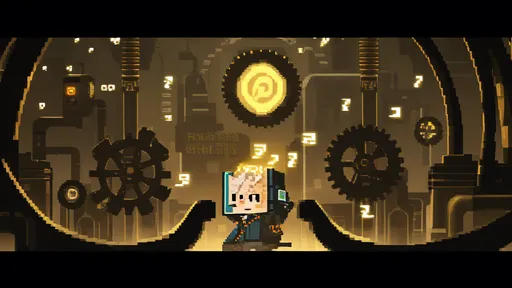
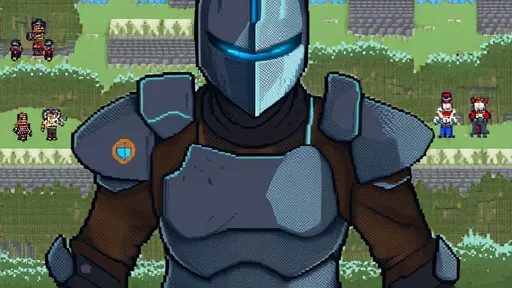
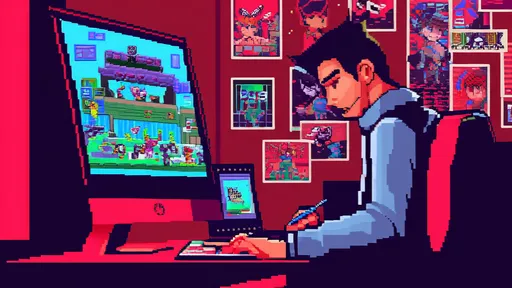
In the digital art world, pixel art stands as a testament to the beauty of constraints. Unlike high-resolution mediums where artists have millions of pixels at their disposal, pixel art demands creativity within severe limitations. The modern approach to pixel art isn't about replicating the past's technical restrictions but embracing them as a deliberate aesthetic choice. Today's pixel artists wield every pixel with intention, transforming perceived limitations into expressive strengths. The core challenge—and art—lies in conveying depth, emotion, and narrative using the bare minimum, making each pixel pull double or triple duty in the composition.
One of the most powerful techniques in contemporary pixel art is the use of selective detail. Instead of detailing every element, artists focus on key areas that guide the viewer's eye and imply complexity. A character's face might have meticulously placed pixels to show determination or sorrow, while their clothing uses broader, simpler patterns. This approach not only conserves precious pixels but also creates a visual hierarchy. Viewers fill in the gaps with their perception, effectively becoming co-creators in the artwork. The brain interprets suggested details, making a sparse arrangement feel rich and complete.
Color theory is another arena where modern pixel artists excel with limited means. With restricted palettes—sometimes as few as 16 or even 4 colors—artists must squeeze every ounce of utility from each hue. Advanced techniques like dithering, where two colors are interwoven to create the illusion of a third, allow for smoother gradients and texture without adding new colors. Color choice becomes paramount; a slight shift in hue can define material, indicate light source, or evoke mood. Shadows and highlights are often exaggerated with stark contrasts, using color to sculpt form and volume where pixels are too scarce to model detail literally.
Animation breathes life into pixel art, and here, too, economy is key. Instead of smooth, high-frame-rate movement, pixel art animation often relies on strong keyframes and clever smearing. A sword swing might be represented by a few well-chosen frames that emphasize the arc and impact, with motion blur suggested by elongated pixels. This stylized motion feels dynamic and intentional, much like classic cartoons. Each animated pixel must justify its existence, contributing clearly to the action or emotion. The result is movement that feels both nostalgic and strikingly expressive, telling a story in mere frames.
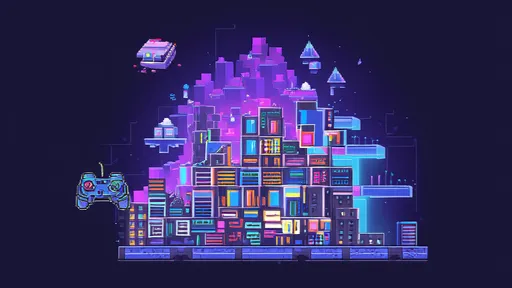
Beyond character and object design, environment art in pixel art uses tiling and patterns to suggest vast spaces. A small, repeating pattern of grass, dirt, and stone can create the impression of a sprawling landscape without dedicating pixels to every blade or pebble. Perspective is often simplified or stylized—isometric views are popular for their ability to show three-dimensional space clearly with 2D sprites. Artists use parallax scrolling, where background layers move at different speeds, to add depth and immersion. These techniques make environments feel expansive and explorable, despite the low resolution.
Perhaps the most subtle skill is leveraging player or viewer imagination. Pixel art’s abstraction invites interpretation. A cluster of brown and green pixels becomes a dense forest; a flickering light suggests a bustling city in the distance. This psychological engagement makes the experience personal and memorable. Modern pixel artists design with this in mind, creating scenes that are not just viewed but completed in the mind's eye. This collaboration between artist and audience is where pixel art transcends its technical limits, offering not less, but a different kind of more—one rich with implied detail and emotional resonance.
In conclusion, modern pixel art turns limitation into virtue. Through strategic detail, masterful color use, expressive animation, and intelligent design, artists convey worlds of meaning with minimal pixels. It’s a medium that proves technical power isn't necessary for emotional power; sometimes, less truly is more.
By /Aug 26, 2025
By /Aug 26, 2025
By /Aug 26, 2025

By /Aug 26, 2025
By /Aug 26, 2025
By /Aug 26, 2025

By /Aug 26, 2025
By /Aug 26, 2025
By /Aug 26, 2025
By /Aug 26, 2025
By /Aug 26, 2025
By /Aug 26, 2025
By /Aug 26, 2025
By /Aug 26, 2025
By /Aug 26, 2025
By /Aug 26, 2025
By /Aug 26, 2025

By /Aug 26, 2025
By /Aug 26, 2025
By /Aug 26, 2025