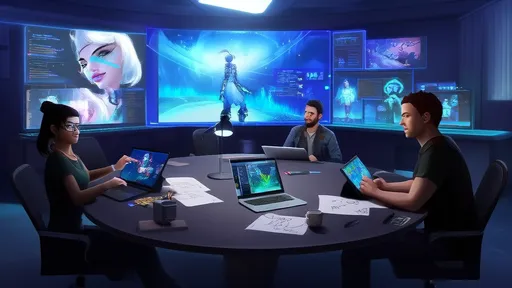
The gaming industry stands at the precipice of a creative revolution, one driven not by human hands alone but by the emergent capabilities of artificial intelligence. Across development studios large and small, AI-generated content (AIGC) is rapidly transitioning from a novel experiment to an integral part of the production pipeline. Its influence is pervasive, touching every facet of game creation, from the intricate brushstrokes of concept art to the very narratives that give games their soul. This is not a story of replacement, but of augmentation—a powerful synergy between human vision and machine execution that is expanding the boundaries of what is possible in interactive entertainment.
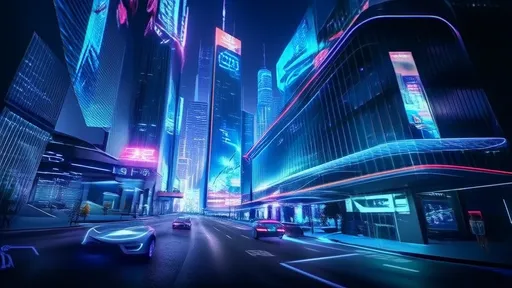
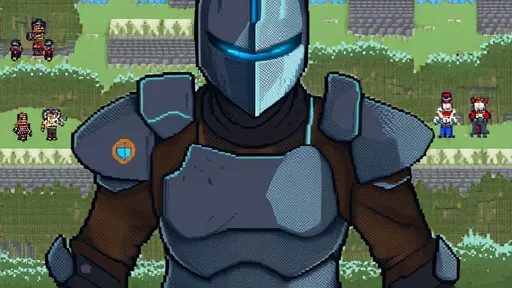
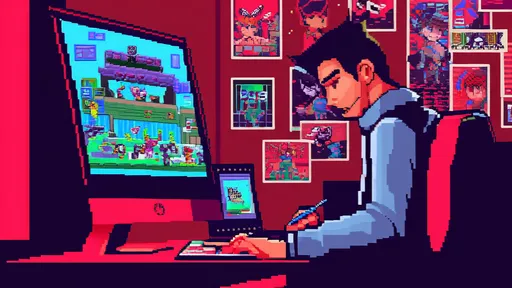
In the realm of visual assets, the impact is nothing short of transformative. The traditional process of creating game art is notoriously labor-intensive, requiring armies of artists to model, texture, and animate thousands of assets. AIGC tools are dramatically accelerating this workflow. Concept artists can now use text-to-image generators to rapidly iterate on ideas, producing a staggering variety of character designs, environments, and mood pieces in minutes rather than days. This allows for a much broader exploration of creative directions early in pre-production, ensuring the final visual style is both unique and fully realized. Beyond concepts, AI is now generating final, production-ready assets. Procedural generation is being supercharged by machine learning, creating vast, diverse, and coherent worlds that feel hand-crafted. Textures for rocks, foliage, and architectural elements can be synthesized on-demand, each variation unique, eliminating repetition and saving immense amounts of artist time.
The applications extend far beyond static objects. AI-driven animation systems are learning the physics and nuances of movement, generating fluid and realistic animations for characters that adapt dynamically to their environment. This means a character can navigate complex terrain naturally without an animator manually creating a clip for every possible scenario. Furthermore, style transfer algorithms allow developers to apply a consistent artistic filter—be it watercolor, cel-shading, or a specific painter's style—across entire game worlds, ensuring a cohesive and striking visual identity with a fraction of the manual effort. The result is games that are not only more visually rich and detailed but also developed in a fraction of the time, lowering the barrier to entry for indie developers with grand ambitions.
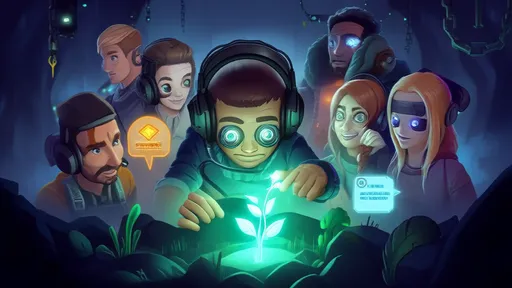
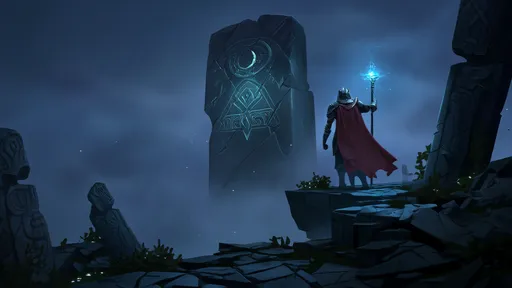
Perhaps the most profound and debated application of AIGC lies in the domain of narrative and dialogue. For decades, game stories have been constrained by the limits of branching scripts written by humans, often leading to a limited set of predetermined outcomes. AI is shattering these constraints. Advanced large language models are now being integrated into game engines to power dynamic narrative systems. These systems can generate quests, dialogue, and even entire story arcs in real-time, responsive to player actions. Imagine a game where every non-playable character (NPC) has their own unique personality, memories, and goals, and converses with the player using entirely unscripted, context-aware dialogue. The player's choices would genuinely matter, creating a truly unique and personalized story for every single playthrough.
This technology moves us beyond the classic dialogue tree. Players could converse with characters using natural language, typing or speaking their questions and responses, and the AI would generate appropriate and character-consistent replies. This enables deeper immersion and emotional connection, as the world feels truly reactive. For writers, these tools act as powerful collaborators. They can be used to brainstorm plot ideas, overcome writer's block, generate background lore for in-game books and letters, or quickly draft variations of dialogue that can then be refined by a human hand. This elevates the writer's role from crafting every single word to directing a powerful creative force, shaping the broader narrative and emotional arcs while the AI handles the immense volume of content required for a living, breathing world.
However, the integration of AIGC is not without its significant challenges and ethical considerations. A primary concern is the issue of ownership and copyright. The data used to train these generative models often comes from the vast expanse of the internet, which includes copyrighted material. Who owns the output—the developer using the tool, the company that created the AI, or the original artists whose work was part of the training data? The legal landscape remains murky and is the subject of intense debate and ongoing litigation. Furthermore, there is the persistent risk of AI generating biased, offensive, or nonsensical content, which could break player immersion or cause reputational damage to a studio. Ensuring quality control and implementing robust content moderation systems is paramount.
There is also a cultural fear that AI will ultimately replace human artists and writers. While it will undoubtedly automate certain tedious tasks, the most likely future is one of collaboration. The human touch remains irreplaceable for providing creative direction, emotional depth, and curating the raw output of the AI. The role of the artist and writer will evolve from pure creation to that of a director and editor, guiding the AI to achieve their creative vision. The demand for high-level creative vision and storytelling skills may actually increase, even as the need for certain manual, repetitive tasks decreases.
Looking ahead, the future of AIGC in gaming is blindingly bright. We are moving towards a paradigm of procedural generation 2.0, where entire game worlds are not just generated based on mathematical algorithms, but are designed by AI that understands narrative pacing, environmental storytelling, and game balance. AI directors could monitor a player's emotional state through biometric feedback or playstyle and adjust the game's difficulty, music, and even story beats in real-time to create a perfectly tailored experience. The line between pre-scripted content and emergent, AI-driven storytelling will continue to blur, ultimately leading to games that are infinite, ever-changing, and deeply personal.
The adoption of AIGC marks a fundamental shift in game development. It is a powerful tool that democratizes creation, empowers smaller teams to compete with giants, and unlocks new forms of interactive storytelling that were previously unimaginable. While challenges around ethics, quality, and implementation persist, the industry is charging forward. The games of the future will be born from a partnership between human creativity and artificial intelligence, and together, they will create worlds more vivid, stories more compelling, and experiences more personal than we have ever known.
By /Aug 26, 2025
By /Aug 26, 2025
By /Aug 26, 2025
By /Aug 26, 2025
By /Aug 26, 2025
By /Aug 26, 2025
By /Aug 26, 2025
By /Aug 26, 2025
By /Aug 26, 2025
By /Aug 26, 2025
By /Aug 26, 2025
By /Aug 26, 2025

By /Aug 26, 2025

By /Aug 26, 2025
By /Aug 26, 2025
By /Aug 26, 2025

By /Aug 26, 2025

By /Aug 26, 2025
By /Aug 26, 2025
By /Aug 26, 2025