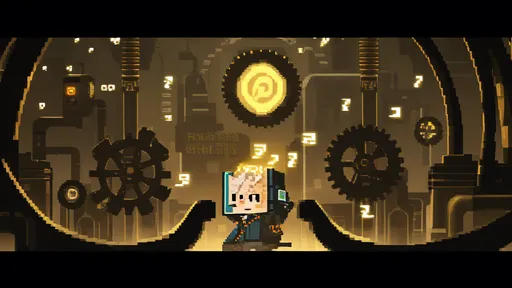
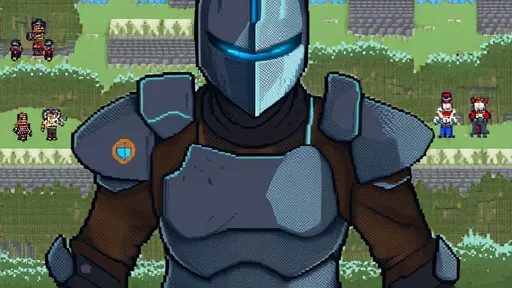
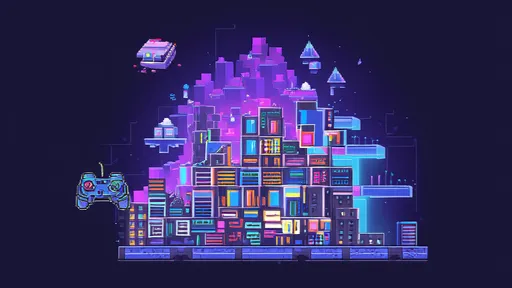
The gaming landscape is perpetually in flux, a dynamic ecosystem where technological advancement is often the most celebrated currency. Yet, in a fascinating counter-movement, a growing cohort of developers and modders are looking not forward, but backward. This is the world of the "Demake"—a creative process that takes modern, often graphically intensive AAA titles and reimagines them through the aesthetic and technical constraints of bygone hardware eras, predominantly the 8-bit and 16-bit generations. It is a deliberate step away from photorealism, a nostalgic de-evolution that seeks to capture the soul of a contemporary game in the pixelated body of its ancestors.
The term itself, a portmanteau of "downgrade" and "remake," perfectly encapsulates the ethos of the movement. Unlike a traditional remake, which seeks to improve and modernize, a demake intentionally strips away layers of graphical complexity and often reworks mechanics to fit a simpler, more abstract design philosophy. It is not merely about making a game look old; it is a thoughtful act of translation. Developers working on demakes must ask fundamental questions: What is the core gameplay loop? What are the essential narrative beats? How can this complex 3D world be represented in two dimensions with a limited color palette? The answers to these questions often result in a product that feels both entirely new and comfortingly familiar.
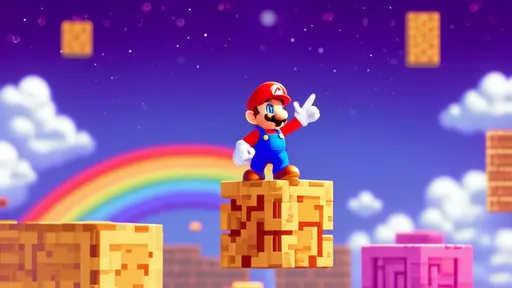
The motivations behind this trend are as varied as the demakes themselves. For some creators, it is a powerful form of nostalgia, a way to connect the games of their youth with the blockbusters of today. It answers the whimsical question, "What would Cyberpunk 2077 have looked like on my Super Nintendo?" For others, it is a formidable technical and creative challenge. Working within strict hardware limitations—be it the number of sprites on screen, the audio channels available, or the resolution—requires immense ingenuity. It is a test of pure game design, where flashy graphics can no longer be relied upon to carry the experience. The game must stand on the strength of its mechanics and art direction alone.
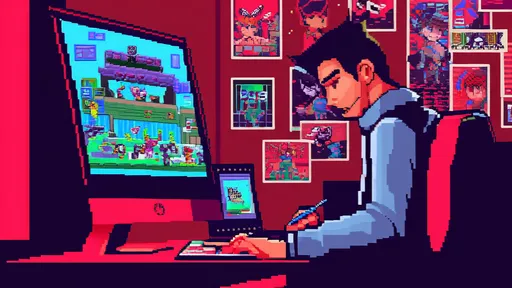
Furthermore, the demake scene is a vibrant expression of punk-rock DIY ethos within game development. These projects are often labors of love, created by small teams or even solo developers using accessible tools and engines like PICO-8, TIC-80, or even older official development kits emulated on modern PCs. This accessibility has democratized the act of engaging with beloved AAA intellectual property, allowing fans to reinterpret and pay homage to their favorite worlds without the multi-million dollar budgets and corporate oversight of the original titles. It is a form of participatory culture, where the line between player and creator becomes beautifully blurred.
The artistic merit of these projects is undeniable. A successful demake is not a inferior copy; it is a reinterpretation. The artists behind them must become masters of implication, using a handful of pixels to suggest a detailed character or a vast environment. The limited color palettes force a focus on strong contrast and clear visual communication. The chiptune music compositions, constrained by the number of audio channels, often become incredibly catchy and iconic melodies that distill the essence of the original orchestral score into pure, energetic nostalgia. In this way, demakes can be seen as a distinct art form, one that celebrates constraint as a catalyst for creativity.
Notable examples abound within the community. The imagined Bloodborne demake, which captured the grim atmosphere of Yharnam in a 16-bit shell, became so popular it garnered attention from the original game's developers at FromSoftware. Other projects have reimagined Dark Souls as a top-down Game Boy Color adventure, The Last of Us as a stark, atmospheric MS-DOS era title, and Elden Ring as a classic isometric RPG. These are not mere curiosities; they are fully realized, often brutally difficult, and incredibly compelling games in their own right. They prove that a compelling world and tight gameplay are timeless, transcending the era of their technical execution.
This movement also serves as an intriguing historical and educational tool. For a younger generation of gamers who grew up with high-definition 3D graphics, demakes provide a tangible, playable bridge to understanding the foundations of the medium. They can experience the mechanical heart of a modern classic without the visual noise, gaining an appreciation for the design principles that have always been central to great games, regardless of their graphical fidelity. Conversely, for veterans, it is a chance to see the evolution of game design principles laid bare, to witness how a modern mechanic is filtered through a classic lens.
Ultimately, the demake phenomenon is far more than a passing fad or a simple act of nostalgia. It is a critical and creative commentary on the state of the gaming industry. In an age where development cycles are longer and budgets are ballooning to unsustainable levels, the demake is a reminder of a different time. It champions the idea that innovation and artistry are not solely dependent on technological power. It is a celebration of the raw, foundational elements of interactive entertainment—game feel, atmosphere, and clever design. The demake movement asserts that sometimes, to truly appreciate how far we have come, we must first creatively imagine what it would have been like if we had never left.

By /Aug 26, 2025
By /Aug 26, 2025
By /Aug 26, 2025
By /Aug 26, 2025
By /Aug 26, 2025
By /Aug 26, 2025

By /Aug 26, 2025

By /Aug 26, 2025
By /Aug 26, 2025
By /Aug 26, 2025
By /Aug 26, 2025
By /Aug 26, 2025
By /Aug 26, 2025
By /Aug 26, 2025
By /Aug 26, 2025
By /Aug 26, 2025

By /Aug 26, 2025
By /Aug 26, 2025
By /Aug 26, 2025
By /Aug 26, 2025